Played by Naima Simone blitz with giveaway
**This post contains Amazon affiliate links which will allow me as an associate to earn a small commission on any purchase made through the link of the products I share. This commission in no way changes the pricing of any items for the buyer.**
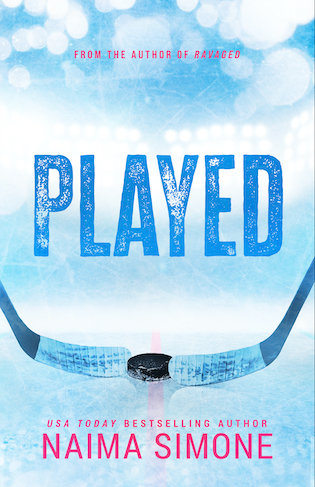
Played
Naima Simone
Publication date: September 3rd 2024
Genres: Adult, Contemporary, Romance, Sports
USA Today bestselling author Naima Simone heats up the page with intensity and wit in this romance between a pro hockey player and a firefighter, both struggling to move on from the past.
Being a firefighter isn’t easy. Especially for a Black woman. Working with family helps a little. But when somebody from your company doesn’t come back from a call, it’s brutal—as in, “How’m I supposed to go on?” brutal.
And one death took me to a really dark place.
A year later, I’m at the Pirates ’hockey training facility. Just another day on the job. Until I find a charred journal. I look inside for the owner’s name, but the words on the page punch me in the gut. It’s like reading my own thoughts. Reliving my own pain.
The journal belongs to Solomon Young, left-winger for the Pirates—a father and widower. When I return it, I’m racked with guilt for the invasion of privacy. The look Solomon gives me is cold as ice.
But damn if that man isn’t hot as hell.
Now he’s stuck in my brain. And fate seems intent on making us face off.
Goodreads / Amazon / Barnes & Noble
—
EXCERPT:
Hours later, after the call to the hockey training facility, I finally sink to my bunk, the leather-bound book in my hands. I stare down at the journal, flipping it from front to back. Why am I so drawn to it? Hell, right now, I really am feeling like fucking Gollum with the One Ring.
This holds someone’s personal, most private thoughts. Yet I trace the Celtic tree of life emblem on the front, then toy with the leather string wrapped around it. The longer I hold it, touch it, the stronger the curiosity stirs inside me.
It’s wrong to pry. Wrong to even consider opening the cover and . . .
Dammit.
Even as the . . . ickiness writhes inside me like a pissed-off nest of snakes, I loosen the strap and slowly open the journal. There’s no name on the inside flap or on the first page where
it’s typed This journal belongs to . . . with a line for the identification of the owner. Conversely, that makes me feel an iota better about violating this faceless and nameless person’s privacy.
Or I’m just trying to justify what I’m about to do.
What I can’t seem to stop myself from doing.
Slowly, as if I’m opening a box of precious treasure, I flip to the first page.
August 2
Dear Kendra,
Goddamn, I feel so stupid even writing that. You know I don’t do this shit. The most I’ve ever written was a grocery list the one and only time you let me go shopping by myself. And we both remember how that turned out. A $500 bill and a shit ton of beer and beef jerky. But here I am, writing in a journal of all things. The therapist your father insisted I go see gave me this as homework. And if I want to keep seeing the ice, I have to cooperate. Apparently, I have an anger problem that’s not getting any better. Your father better be glad he’s not just my in-law but the owner of my team or else I’d tell him and the therapists to go fuck themselves. Yeah, sorry. I know that’s your dad.
Well, since I have to do this and you’re the only person I want to talk to, I’m writing this shit to you. Besides, as crazy as it sounds, I swear I can hear you in my head. And I feel closer to you. Like you’re here right next to me. I said it sounded crazy, right?
I don’t have anything to say.
Except.
Except I miss you. I miss you like fucking crazy, sweetheart.
And I need you.
August 8
Dear Kendra,
Last night I dreamed about you.
It was so real. You still wore that peaches and cream body lotion. Your voice, smile, touch—they all were the same. And even though I was holding you again, talking to you again, a part of me knew that it was a dream. That I had to take advantage of this time with you while I had it. But even knowing that, I woke up reaching for you. And the pain of patting those cold, empty sheets sent pain through me all over again. As sharp as if you’ve been gone two days instead of two years. I lay there in bed, staring at the ceiling, unable to move. Like the pain, the grief were physical weights pressing me into the mattress, smothering me.
For a moment, Kendra, I thought the unthinkable.
I wanted to follow you.
Shit, I can only admit this here, to you.
I haven’t had those thoughts since the days right after you left. Why is it so hard for me to say “died”? I can’t. Even years later, I can’t say it out loud. Because it makes you being gone so fucking final. As if death isn’t. And yet, I haven’t said it in two whole goddamn years.
Which makes no fucking sense, right? If I want to follow you there, I should have the balls to say the words. I can hear you cursing me out for even thinking about it. You were always the bravest out of the two of us. I might fuck people up on the ice for a living but you? You were the one who was fearless, rushing into life, enjoying the hell out of it. Forcing me to go along for the ride.
I can’t fucking do this without you, Kendra. I don’t want to.
But we have Khalil.
He’s my lifeline, my saving grace. I hate to put that kind of pressure on a five-year-old kid, but I swear, if it wasn’t for him, I don’t know . . .
Sometimes I believe . . . Shit, I feel ridiculous for even saying this. But sometimes I believe you somehow knew you wouldn’t be here, so you gifted me with him. I will always have a piece of you here as long as I have him.
Yeah, I’m done after that.
I’m out.
I don’t stop reading until the last entry. I close the leather cover, my heart slamming against my rib cage, pumping hurt, anger, and sadness through my veins.
At some point, I realized the identity of the book’s owner.
Solomon Young.
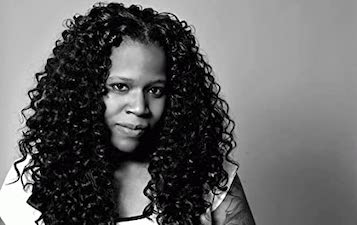
Author Bio:
Published since 2009, USA Today Bestselling author Naima Simone loves writing sizzling romances with heart, a touch of humor and snark. Her books have been featured in The Washington Post and Entertainment Weekly, and described as balancing “crackling, electric love scenes with exquisitely rendered characters caught in emotional turmoil.”
She is wife to Superman, or his non-Kryptonian, less bullet proof equivalent, and mother to the most awesome kids ever. They all live in perfect, sometimes domestically-challenged bliss in the southern United States.
Website / Goodreads / Facebook Page / Facebook Group / Twitter / Instagram / Newsletter / TikTok
GIVEAWAY!
—

Cover Reveal: The Book Binder by C.A. Cordova
**This post contains Amazon affiliate links which will allow me as an associate to earn a small commission on any purchase made through the link of the products I share. This commission in no way changes the pricing of any items for the buyer.**

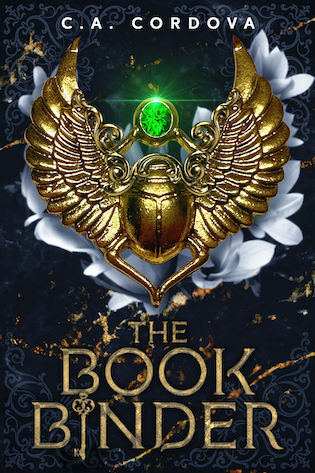
The Book Binder
C.A. Cordova
Publication date: December 6th 2024
Genres: Adult, Adventure, Mystery, Suspense
Choice is an illusion gifted by the gods.
Aria never expected to be a mistress, especially to the Pharaoh’s son.
But when she accidentally witnesses the poisoning of his cup and intervenes, he is intrigued. Even more so when he discovers that she can speak the betrayer’s language and many others.
Aria’s forbidden education as the daughter of a book binder makes her valuable, and she quickly
becomes the prince’s obsession.
As she embraces her newfound power, she begins to question the rulings of the palace and uncovers a world of deception.
Is Aria destined to receive the spoils of the gods or will tragedy befall her?
The Book Binder is an epic adventure novel with elements of suspense and mystery. C.A. Cordova’s tale is woven with intense emotion, dire situations, and female cunning.

Author Bio:
C.A. Cordova is perhaps best described as a whimsical nomad. She has an ever-present thirst for new adventures that has resulted in many moves and many more stories.
C.A. Cordova’s unique novels are crafted under a shroud of bergamot from a bottomless cup of Earl Grey tea. She declares herself an observer of the countless tales that play out in her mind. It is not unusual for her to have upwards of ten works in progress at any given moment, the most active being determined by the tone of the day.
Guided by her love of reading, C.A. Cordova hopes to capture the feeling of blissful immersion she has experienced with her favorite books.
When she is not feverishly tapping away at her laptop with a cat in her lap, C.A. Cordova can be found enjoying time with her family, training her parrot, or tending to her flowerbeds.
C.A. Cordova lives in Texas with her family and many pets.
—
She’s Got The Time by M.O. Mack blitz with giveaway
**This post contains Amazon affiliate links which will allow me as an associate to earn a small commission on any purchase made through the link of the products I share. This commission in no way changes the pricing of any items for the buyer.**

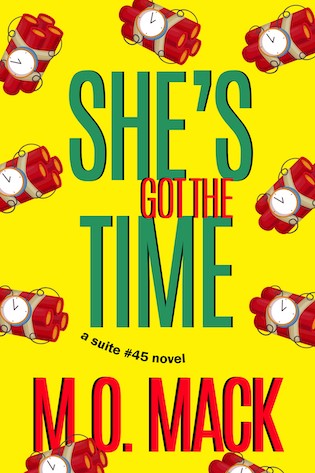
She’s Got The Time
MO Mack
(Suite #45, #3)
Publication date: August 29th 2024
Genres: Adult, Thriller
From author M.O. Mack comes the third, heart-stopping thriller in the Suite #45 series, SHE’S GOT THE TIME.
SENTENCED FOR A CRIME SHE ONLY WISHED SHE COMMITTED…
Emily has broken plenty of rules. Some she regrets. Others, well, not so much.
Running from her husband Ed for example? No regrets. He was a controlling predator who trafficked women while working for the FBI. But had she known she’d end up working for a group of hit men, she might’ve made different choices. Big regrets.
On the bright side, the group only kills bad guys. On the not-so-bright side, every cartel south of the border wants the group dead, and she’s number one on the cartel’s list.
Emily also regrets trusting Charge, her hit man boss. She regrets caring about him more than she should.
But when the feds arrest her for the murder of her ex, Emily knows she’s been set up, and all signs point to Charge. Why would he do this to her? The prison is filled with cartel gangs, and there’s a price on her head.
Can she find a way out before her time is up?
The clock is ticking…
Goodreads / Amazon / Barnes & Noble / iBooks / Kobo
—
EXCERPT:
“I thought you loved me,” she said, knowing now that the confession he’d made after she’d saved him all those weeks ago had just been another lie.
Charge jerked his head back, like she’d taken him off guard. “What’s that have to do with anything?”
“It’s everything.” Because he’d told her that while he’d been preparing to do the hit on Ed, he’d watched her from afar and fallen for her. He’d said it was the reason he’d helped her after she’d run from Ed. “You’ve been playing me this entire time. Haven’t you? The story about you
loving me was a scam to get me to keep working for you.” And it had worked. He’d probably done it because he believed she’d eventually lead him to Ed.
“I don’t have time for this right now. And I’ve proven my loyalty to you.”
“No. You said whatever you had to in order to make me trust you.” She hung her head. “I can’t believe I fell for it.” Not to mention, she’d started having feelings for Charge. She’d taken a life for him. She’d risked her own ass, too.
“I’m sorry you think that,” he said smugly, “but it doesn’t change the situation or what has to be done next.”
“And just what’s that? Am I supposed to take out the warden next? Or the head of one of the gangs here so you get paid?” She pushed back in her chair. “I’m done, Charge. Done.”
“Don’t be silly. You won’t get out of this prison alive unless you pull your head from your ass, Justine, and follow my instructions.”
This again. And why did he always call her Justine when he wanted to control her? Did he think it was some kind of psychological magic wand to garner compliance?
He went on, “You only have a day, two max, before someone realizes you have a ten-million-dollar price on your head. You don’t have much time, but it’s enough time to—”
“No, Charge. No more. I’m not buying into your crap. I mean, look at where I am.” She tried to throw her hands in the air, but they were chained to the table. “We both know I’m not getting out of here. Not after I killed that guard. At best, I’ll survive a week, and if it’s all the same to you, I’d like to enjoy what little time I have left.”
Author Bio:
Obviously, M.O. Mack is a cover. Don’t bother looking for the author’s true identity. She must remain secret due to the sensitive information written in her stories…
Okay, most of all that is total rubbish! M.O. is a full-time author from the great state of Arizona, who loves making stuff up and hates a slow story. The faster the better! Most days, M.O. tries to avoid the news (too icky) so it doesn’t interfere with writing nail-biter stories.
Website / Goodreads / Facebook / Instagram / Newsletter
GIVEAWAY!
—
Look, Don’t Touch by Meg Everly blitz with giveaway
**This post contains Amazon affiliate links which will allow me as an associate to earn a small commission on any purchase made through the link of the products I share. This commission in no way changes the pricing of any items for the buyer.**
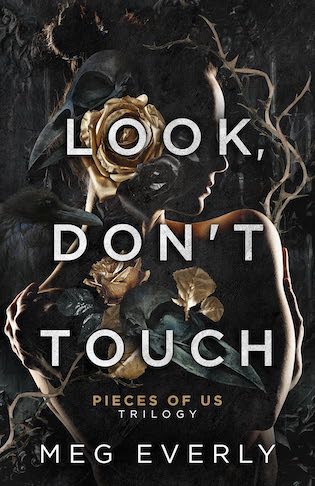
Look, Don’t Touch
Meg Everly
(Pieces of Us, #1)
Publication date: August 27th 2024
Genres: Adult, Contemporary, Dark Romance, Romance
The scars you see are only the beginning.
Hailey Fitzpatrick
When people see me walking on a New York City sidewalk, they think mousey b*tch and stuck-up c*nt. How do I know? It’s NYC. They yell it to my face. I smile to myself and keep walking. After all, I have clients that need me.
I’m wrapping up my first decade as a licensed clinical psychologist. Things are as good as they’ve ever been. Still, I get the itch. The tattoos worked into my skin take the edge off.
When one of my first clients goes on s*icide watch and on of my newest challenges the very ground on which I stand, I seek relief only being blindfolded and bound can bring.
Arlo Judge
Look all you want. Don’t f*cking touch me. No one does.
I’m no longer that little boy who cowers in fear. I’m six three, two hundred fifteen pounds of muscle, and own the largest conglomerates in the States. Still, that boy’s demons live inside me. One in particular looms over my shoulder, always ready to strike.
When I see her, perfectly poised and in command, I think nothing of the beautiful exterior. Then I see the demons lurking in her striking green eyes. I’m intrigued. Hooked. Obsessed.
I need to know how they came to be and how she hides them so well. I need to dig them out and set her free. I never expected that she could do the same for me.
Doctor Fitzpatrick is now accepting new clients!
Look, Don’t Touch is a dark romance. It is the first in the Pieces of Us Trilogy. It’s an MF, four jalapeño, HFN novel with graphic depictions of s*x and k*nk. Trigger Warning for talks of ab*se, death by s*icide, and m*rder.
Pieces of Us is a polyamorous romance trilogy. Book 2, Forever We Fall is an MM, three jalapeño, HFN novel. Book 3, Hard to Judge is an MMF, four flaming jalapeño, HEA novel.
Goodreads / Amazon / Barnes & Noble
—
EXCERPT:
Hailey
My lips part, but I don’t know what to say. I don’t know if I can say anything without sobbing. So I let him go. The door whispers open and, after a moment, closes with an abrupt snap.
I crumple. My hands engulf my face, and I wail. Thoughts of Matt’s handsome face and his bright and tortured eyes haunt me. Sobs burn in and out of my lungs as though they might catch fire. I cry for what seems like forever. My abs cramp, and my fingers begin to tingle.
“Fuck!” I scream for all I’m worth, thankful for soundproofing, and wish I could have it installed in my brain. Where I could turn it on with the click of a button.
Sobs pull a vacuum on my lungs. My chest feels like it may cave in on itself. If I pass out, I can at least avoid this for a little while.
“Hailey?”
My epic cries stop instantly, caught in my shock.
The heavy whispering voice is still in the room and closer than ever. He’s just over my shoulder. “What’s wrong?”
I leap from my seat and rush to the window, wiping at my tears and commanding control over my sorrow as I go. My legs wobble but hold me up.
“You weren’t supposed to see that.” My shaking hands smooth down my pants. “The door opened and closed. I thought you were gone.”
“Your aunt…I was going to get her for you, but she’s not here.”
I’m nodding and not understanding anything.
Why is he still here? Why is Matt dead? Why couldn’t I save him?
I stare out at the endless sky.
Mr. Judge’s large frame fills my periphery. He stands no more than a foot away to my left. He faces the window.
“I could tell the call you got wasn’t a good one. I thought your aunt could help.”
No one can help.
“You didn’t answer my question,” he reminds me as if I’m the patient and he’s my therapist. It’s apt for the moment.
I swallow, knowing I shouldn’t say anything. Knowing I can corrupt his treatment more than I already have. If he knows I’ve failed one client, what would that mean for him? Plus, confiding goes beyond the realm of professionalism.
“I just lost a patient.” I choke down a sob. “My first.”
He stuffs his hand into nice slacks. “Patient or loss?”
“First patient and first patient loss.” He’s taller than me by a lot, and I’m not considered short.
“How long have you been doing this?”
I notice a cross-hatched design on the sleeve of his suit jacket before I force my eyes away and back to the sky. The sunset is just beginning to blend its colors into the clouds that are no longer heart-shaped but gray and droopy. They promise rain.
Cold. Darkness. Sorrow.
“Six years licensed with my PhD. Thirteen, if you include all the practicums and internships.”
“It’s never good to lose someone, but it seems almost inevitable in your line of work.” His words are soft.
Sure, colleagues of mine have lost patients. But I don’t specialize in suicide prevention. I’d tried to talk Matt into seeing a psychologist who does. I even set up appointments for him. Time and again, he refused to show up at a single one.
“I specialize in cognitive and behavioral therapy. In the beginning, I saw patients dealing with severe depression, anxiety, and PTSD. Slowly, that shifted into phobias, relationships, and sexual disorders. I’ve been lucky.”
“Or good at your job,” he offers.
My throat aches from my cries and screams. It’s thick and cumbersome. Because of his kindness, the threat of more raging sentiments sits on the precipice of erupting.
“Considering I left you raw and vulnerable with no resolution, cried in front of you, and told you things I shouldn’t, I’ll go with luck.”
The room goes quiet for a long time. We stand side by side, staring at the birds, the trees, the people, the nothingness and everythingness of life in front of us. There’s a calming reassurance in the silence, in his disposition.
“I am sorry.” His words vibrate with meaning.
“Whatever for? You’ve done nothing wrong.” I breathe.
He takes his hand out of his pockets. They hang by his side. He has long fingers, and when he balls them into fists, the veins and muscles in his hands bulge.
“I can’t offer you comfort.”
For a moment, I want to cry for him. For all the comfort and pleasure that he’s lost. For all the connections he’s been unable to make in his life. For his discomfort. For his perennial solitude.
“You don’t have to touch, talk, or even allow me to look at you to provide me comfort, Mr. Judge.” I pull my sneaking gaze away from him and focus on the horizon. The sky has turned dark, drained of all its color. For this moment, it looks brighter than it did thirty minutes ago. “I appreciate your thoughtfulness and presence.”
He nods. I can barely see the movement in my periphery.
“Can I call someone for you?”
There is no one to call.
“No. You’ve helped quite a lot. Thank you.”
“Then I’ll leave you to it.”
I nod. “Goodbye, Mr. Judge.”
He retreats from view. This time, I watch his silhouette as it appears in the light of the exit room in the reflection of the window. He stalls in the doorway.
“Goodbye, Hailey.”
Then he leaves and closes the door behind him.

Author Bio:
Meg Everly writes stories with sentiment, smut, and love with no bounds.
Website / Goodreads / Instagram / TikTok / Booksirens
GIVEAWAY!
—
Designs on Love by Tomi Tabb blitz with giveaway
**This post contains Amazon affiliate links which will allow me as an associate to earn a small commission on any purchase made through the link of the products I share. This commission in no way changes the pricing of any items for the buyer.**


Designs on Love
Tomi Tabb
(Friends of the Unexpected Royals, #1)
Publication date: August 30th 2024
Genres: Adult, Comedy, Contemporary, Romance
Min grew up with dreams of becoming a professional ballerina, but fate had other plans for her.
Fresh out of the London School of Fashion, she’s set her sights on one goal: earning an internship at one of the most exclusive fashion houses in the country—the Clarissa Lee Atelier.
When a series of unfortunate events leads to an unexpected meet-cute with a tall, dark, and handsome royal guard, Min’s plans are suddenly turned upside down.
She never expected to end up with a date with a soldier named Sam instead of applying for her internship.
Despite the setback, it’s not long before Min is offered her shot at a dream design commission. This is everything she’s been working toward. Devoting all her time and energy to it should be a no brainer, except she’s started to fall for Sam, who’s also laser focused on advancing in the army while taking care of his sisters.
As they navigate their growing feelings for each other, Min finds herself at a crossroads. With their careers on the line, can Min and Sam find the time to get their happily ever after?
—
EXCERPT:
We spend about an hour and a half wandering around the small space until we’re back to where we started. From the landing overlooking the main entrance, I take a few extra moments to soak in all that we’ve seen. I feel like I’m inside a Barbie Dream House.
“Do you think you have enough inspiration to finish putting your portfolio together?” Liz asks, leaning against the stairwell railing.
“Actually, I have a small confession to make.” Heat sears through my cheeks.
Liz turns and studies me for a moment, her lips thin. “Min, don’t tell me . . . Have you scrapped everything you had and started again?”
I look away, bobbing my head up and down.
“Gah, you’re such a perfectionist.” She sighs. “I suppose that’s why we get on so well.”
“I think from what I’ve seen here today, I have enough ideas floating around my head to get started on a new collection.”
“And to finish it?”
“I’ll go to my usual place.”
“The National Portrait Gallery?” she asks.
“Uh-huh.”
We begin descending the stairs, staying to the right.
“Are you going to be able to finish before the deadline for the Clarissa Lee internship? It’s only two weeks away.”
I wave her off. “I have plenty of time. I can get it done.”
Liz mutters something under her breath that sounds like, “I hope so.”
“I will, I promise.”
Reaching into her pocket, she retrieves her phone. “I’ll set another reminder to myself to check in on you next week and the week after.”
“You’re the best. Have I ever told you that?”
She grins. “Yes, but not often enough.”
“Come on, let’s stop by the cafe and grab a tea before we head out. My treat.”
“How can I say no to that?”
We exit the exhibit to the main museum and walk toward the gift shop. A banner advertises a few exhibits coming to the museum later this spring. Liz grabs my sleeve and stops me in my tracks.
“Oy, Min, look, there’s an exhibit for the fiftieth anniversary of the Westminster Ballet in February. That looks like it’s right up your alley. Do you want to stop and book tickets for it while we’re here?”
I swallow hard as my stomach muscles clench. It’s been four years since I was fired from the LABT. I should be able to look at a dumb ol ’tutu and not become so emotional about it. But I can’t. Artum managed to ruin the one thing I loved. I may have moved to London, started a new career, and a new life, but I still can’t seem to let go of the past.
“No, I . . . I can’t,” I sputter.
Liz has never pushed me to talk about the past, but she knows that I used to dance professionally. As she reads my body language, her face softens. “Tea, then.”
Like a mother hen tucking me under her wing, she steers me toward the cafe and changes the subject. “Did I tell you that I have a few ideas for decorating my new flat? I’d love to hear your thoughts on it.”
“OK,” I croak.
Liz starts on about her bedroom, but my mind is still stuck on Artum. Will I ever be free from him?

Author Bio:
Tomi is a sweet romance author who enjoys writing feel-good stories with a heart.
Her first published novel, “Dancing With a Royal,” made its debut in 2020.
Outside of her day job, and attending grad school, Tomi enjoys figure skating and hunting for new pumpkin flavored foods. Her current favorite item is pumpkin spice Milano cookies.
Become a part of Tomi’s Treasured Community of readers by joining her newsletter or visiting her official website.
GIVEAWAY!
—
 Carries Book Reviews

Recent Comments