The Rise of Yezurkstal by Joseph P Macolino blitz with giveaway
**This post contains Amazon affiliate links which will allow me as an associate to earn a small commission on any purchase made through the link of the products I share. This commission in no way changes the pricing of any items for the buyer.**
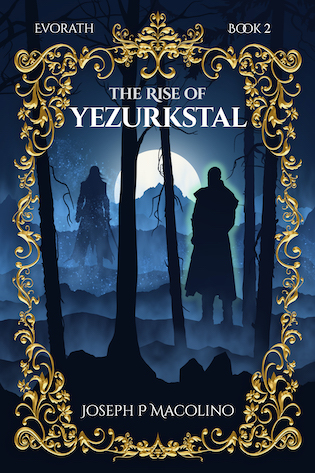
The Rise of Yezurkstal
Joseph P. Macolino
Publication date: July 11th 2023
Genres: Adult, Fantasy
He’s lived a sheltered life. But after his village is destroyed, will he be able to find his way in Evorath without the guidance of his own kind?
Zelag, an inexperienced shapeshifter lived a life free of strife or conflict. But when a new spell brings humans to Evorath, his village finds itself in the path of destruction. The sole survivor of the attack, he must now face the realities of life on his own.
Rescued by Evorath’s Avatar, Zelag joins with the heroes who drove back Yezurkstal last year. While they struggle to gather enough support of their own, their enemy continues to grow stronger. Together, they must fight to protect the vulnerable humans from being enslaved by Yezurkstal.
Will Evorath’s heroes have enough strength to overcome Yezurkstal and his growing undead army?
The Rise of Yezurkstal is the second book in the Evorath epic fantasy series. If you enjoy mythical creatures, magic, and exploring an expansive fantasy world, you’ll love Joseph P Macolino’s fast-paced adventure.
Buy The Rise of Yezurkstal today and see if Evorath’s heroes can hold this growing evil at bay.
—
EXCERPT:
Artimus squeezed Savannah’s hands, gazing adoringly into her sweet eyes as the priestess spoke.
“…And after this day, these two shall no longer be separate individuals, but instead are to be united as one. As they embark on their journey and enter into a new life, they must learn to act as one. Evorath has blessed us with all that we could desire, and now these two shall become one and bless one another with all they have…”
Some of the smoke from the incense crept past his nose, causing Artimus to turn his gaze downward and squelch a cough. The smell of pine filled his nostrils as he cleared his throat and returned his attention to Savannah.
“…Like a seed planted in fertile ground, the connection that is established today will still need to be nurtured and cared for. Love must act like water. Trust, like sunlight. Commitment, like compost. Only by truly accepting one another can these two spirits be joined in matrimony.”
Artimus noticed Savannah’s smile expand, her eyes glimmering with excitement. He could not help but reciprocate, a foolish grin coming over his face.
“So, Artimus Atyrmirid, will you devote yourself wholly to this woman, protect her, love her, and provide for her?”
“It is Evorath’s will and mine as well. She shall be of my own flesh.” Artimus felt as if he was observing himself as he incanted these words, a tangible excitement running down his spine and filling him with energy.
“And Savannah Sylvanas, now to be Savannah Atyrmirid, will you devote yourself wholly to this man, support him, love him, and bare his children?”
“It is Evorath’s will and mine as well. He shall be of my own flesh.” Savannah looked as if she might burst with excitement as she spoke, her voice higher pitched than usual.
“And so it is, and ever shall be. Once Evorath has willed it, it cannot be unwilled.” The priestess spoke with force now, her voice booming throughout the clearing.
“Henceforth, Artimus and Savannah Atyrmirid shall be united as one. Through times of abundance and times of scarcity, they will have a bond beyond the physical realm. Their spirits are intertwined and shall remain as such for all eternity. Let everyone bow their heads now and observe the song of Evorath.”
The bard in the east continued playing the harp, the melody of his tune slowing to a modest rhythm. He played four consecutive notes in a simple meter, progressively moving from a low pitch to a higher one. This simple melody continued for a few measures before the western bard pulled out a wooden recorder and joined in.
Tapping his foot to the rhythm of the first bard, the woodwind player started with a soft and calming melody. Each note worked to propagate the romantic atmosphere. Like most aspects of the ceremony, this traditional song was simple but effective, the soothing melody instilling a palpable feeling of love and commitment.
Artimus stood cradling Savannah’s hands, peering deep into her eyes. The entire crowd stood listening in silence, affected by the contagious feeling of bliss. Artimus could feel his skin tingling as if he was being influenced by magic as the music rose in intensity, the recorder playing louder and more pronounced notes.
After the crescendo, the music lulled back into a soothing tone, a feeling of completeness overcoming him. Artimus was not a musician, but as he stood watching tears of joy well up in Savannah’s eyes, he felt a connection to the music. Though he had heard this wedding song a few times in the past, it was different experiencing it from the center. This was a day he had been awaiting, and this song signified that the wait was over.

Author Bio:
Husband, father, and seeker of truth, Joseph Macolino has a passion for nature, philosophy, and all things fantasy. An unwavering Christian and self-declared anarchist, he dreams of a future human society where people can truly cooperate and voluntarily exchange ideas, goods, and services.
When he’s not writing Evorath, he’s likely outside gardening, spending time watching a show with his family, or reading a book on philosophy. Considering himself a lifelong student of humanity, Joseph enjoys meeting new people and being exposed to new perspectives. He believes each person’s unique gifts can help contribute to stronger communities and hopes his work encourages others to embrace their gifts.
Evorath introduces a rich world full of magic, adventure, and diverse characters trying to find their place in the world.
GIVEAWAY!
—

Everything’s Fine by Cecilia Rabess blitz with giveaway
**This post contains Amazon affiliate links which will allow me as an associate to earn a small commission on any purchase made through the link of the products I share. This commission in no way changes the pricing of any items for the buyer.**


Everything’s Fine
Cecilia Rabess
Publication date: June 6th 2023
Genres: Adult, Contemporary, Romance
“Extraordinarily brave…plain funny as hell, too.” —Zakiya Dalila Harris, New York Times bestselling author of The Other Black Girl
“A subtle, ironic, wise, state-of-the-nation novel, sharp enough to draw blood, hidden inside a moving, intimate, sincere and very real love story–or vice versa.” —Nick Hornby
On Jess’s first day at Goldman Sachs, she’s less than thrilled to learn she’ll be on the same team as Josh, her white, conservative sparring partner from college. Josh loves playing the devil’s advocate and is just…the worst.
But when Jess finds herself the sole Black woman on the floor, overlooked and underestimated, it’s Josh who shows up for her in surprising—if imperfect—ways. Before long, an unlikely friendship—one tinged with undeniable chemistry—forms between the two. A friendship that gradually, and then suddenly, turns into an electrifying romance that shocks them both.
Despite their differences, the force of their attraction propels the relationship forward, and Jess begins to question whether it’s more important to be happy than right. But then it’s 2016, and the cultural and political landscape shifts underneath them. And Jess, who is just beginning to discover who she is and who she has the right to be, is forced to ask herself what she’s willing to compromise for love and whether, in fact, everything’s fine.
A stunning debut that introduces Cecilia Rabess as a blazing new talent, Everything’s Fine is a poignant and sharp novel that doesn’t just ask will they, but…should they?
—
EXCERPT:
Chapter 11
Jess’s first day of work, the first day of the rest of her life. Into the elevator and up to the twentieth floor, where the doors open with a little whoosh.
The entire building smells like money.
She receives a small plaque with her name printed in all caps: JESSICA JONES, INVESTMENT BANKING ANALYST. Then mintroductions—the other analysts on the team: Brad and John and Rich and Tom, or maybe it’s Rich and Tom and Brad and John—and also Josh, who Jess remembers from college.
“Hey,” she says, “it’s you!”
He looks up from his desk—he is already installed at a workstation, looking busy and important—but his face is blank.
They had a class together last year and Jess remembers him, because he was the worst.
“Jess?” she offers. “From school?”
He blinks.
“We had a class together?” she tries again. “Supreme Court Topics?”
He just looks at her, saying nothing. Is it possible she has something on her face? “With Smithson? Fall semes—”
“I remember you,” he says. And then promptly swivels in his chair.
Cool, Jess thinks. Nice catching up.
She starts to go.
“You know,” he says, not turning, “I knew you’d been assigned to this desk.”
Jess stops. “Oh, really?”
He nods—the back of his head—“I worked with these guys when I was here last summer. And I graduated off-cycle, so I’ve been back since January.” He pauses. “They asked me about you.”
“What did you say?”
“Nothing.”
“What! Why didn’t you tell them I was amazing?”
“Because,” he says, finally turning to look at her, “I’m not convinced you are amazing.”
The first time Jess met Josh, it was fall of their freshman year. November. The night of the 2008 election. All day the campus had pulsated. History in the making. Around eleven the election was called and Jess emerged stunned and delirious onto the quad, which had erupted into something like a music festival. Students spilled out into the night cheering and hugging. Car horns honked. Someone screamed woot woot and, somewhere, a trombone, brimming with pathos, played a slow scale.
Jess had the feeling she had been shot out of a cannon; she was blinking into the moonlight when a couple of reporters from the school paper stopped her. They were compiling quotes from students on the eve of this historic moment. Did she have a minute to share her feelings, and would she mind if they took her photo? Jess said sure, even though the air was crackling and she wanted to weep.
The reporter’s pencil was poised. “Whenever you’re ready.” What could she possibly say? There were no words.
“I’m just… I’m just… fucking ecstatic! Is this even real? And now I’m probably going to go have, like, thirty shots—no, fifty!—because that’s more patriotic!”
The student reporter looked up from his mini legal pad. “End quote?” “Wait, no! Don’t write that!”
“What do you want to say?”
Jess thought about it, collected herself. Imagined her dad reading her words. Her dad, who she’d spoken to just hours ago, and whose reaction to the early returns—Ohio and Florida were set to break for Obama—was to pour himself another Coke and say: “Well, Jessie, I’ll be darned.”
She started over. “I feel the weight of history tonight. To cast my very first vote for our nation’s very first Black president is such an awesome privilege. A privilege that my ancestors, slaves, did not share. Standing on the shoulders of so much strength and sacrifice, I’ve never felt more humbled or hopeful.”
“That’s great,” the reporter said. “Now just stand over there and we’ll take your shot.”
Jess took a step to the left and watched as the reporter approached another student. A sandy-haired freshman wearing chinos and a collared shirt.
The photographer said to Jess, “Look this way. On the count of three.”
And the reporter said to the boy in business casual, “How are you feeling about the election?”
Jess turned to the camera and smiled.
The guy in chinos turned to the reporter and said, “Everyone seems to forget that we’re in the middle of a financial crisis. The stock market is in free fall. Gas is four dollars a gallon. So I’m not convinced that now is the right time to entrust another tax-and-spend liberal with the economy,” he shrugged, “but I guess I can see the appeal.”
Jess, aghast, turned to give him a dirty look, her smile dropping just as the flash popped.
The next day she was on the front page of the school newspaper under a headline that read STUDENTS REACT TO OBAMA’S HISTORIC WIN.
The picture was good—the angle, the moonlight, her face radiating quiet wonder—and that, plus the gravitas of the moment, made Jess feel like this was something she would show to her children and their children one day.
There was only one problem.
The paper had spoken to ten students, a grid of two-by-two photos and quotes, names and graduation years printed below. But there were only two faces above the fold. There was Jess, but also the guy in the collared shirt, with his terrible quote. Jess’s friends agreed that it was a stupid thing to say. Miky, who lived across the hall, said, “Who pissed in his Cheerios?” And Jess’s roommate, Lydia, peered at the photo and declared: “He looks boring.”
Still, Lydia tacked the paper to the outside of their door. With a marker, she drew a frame of hearts and stars around Jess’s face. But there was no way to accordion the paper so that only her picture appeared. It cut off the text strangely and warped her smile. It was impossible to see Jess without seeing Josh. Eventually Miky took a Sharpie and drew devil ears and a weird mustache across his face, and that was better.
Eventually the tack hardened and the paper fluttered to the floor. At that point it was the spring semester and the hallway had devolved into a persistent, low-grade chaos: crushed pizza boxes, twisted extension cords, a mysterious pair of men’s underwear. And when the cleaning crew cleared out the dormitory between the spring and summer sessions, they swept everything, including that momentous reminder, into the trash.
But until that happened, Jess could return to her room each day and see the newspaper, like a talisman, stuck to her door, emanating strength and inspiration, and when she looked at it, she would think: We are standing at the precipice of a bright new world, hopeful and resolute, knocking on the door of progress, with the conviction of what’s on the other side.
And then she would slide her eyes to the right, to the photo of JOSH HILLYER ’12 and his terrible quote, and she would think: Asshole!
Brad and John and Rich and Tom’s and Josh’s desks are all arranged in a tight semicircle around a dirty carpet in the center of the room. In the bullpen, they are packed like sardines, swimming in pitchbooks and gym bags and coffee cups, so there is no space for Jess.
“We’ve got you over here,” Charles says. He is the most senior associate on the team, and Jess can tell he’s in charge because he wears his tie the loosest and calls everyone by their last name. Even more senior is Blaine, the team’s managing director, but he can’t be bothered to meet her.
Charles leads her to a row of desks along the wall. By now, after the all-day orientation, it’s after five, but the office is still buzzing. Still, the seat that Charles points to and all the ones that surround it are empty. The desks, though, are covered in equipment, telephones and Bloomberg Terminals and digital handsets.
Traders, Jess guesses.
Traders are the first ones in and the first ones out. When the market closes their day is done. Jess feels a tingle of excitement. The traders are loud and potty-mouthed and wear hideous pinstripe suits. The investment bankers, on the other hand, are nasty but
humorless. Jess might have liked to be a trader but had missed the deadline to apply. Maybe this is a sign, an opportunity.
She imagines herself shouting orders into a phone, telling someone to go fuck themselves when she doesn’t like a price.
“So this is where the traders sit?”
Charles blinks. “No, not exactly.”
“Then what’s with all the telephones?”
“Switchboard,” Charles says. “Secretaries and stuff. You know, ‘Goldman Sachs, how may I direct your call? ’Switchboard,” he repeats. “Secretaries.”
“Oh.”
He pauses. “Yeah.”
By the end of her first month, Jess can say How may I direct your call? in four languages and she still hasn’t been assigned any real work. Her back is to the bullpen, but whenever she looks over, the other analysts appear to be chained to their chairs, heads bent over their desks, doing God’s work.
Jess is doing nothing.
It doesn’t help that when the bankers shout for coffee orders or someone to run to the copy shop, they do it in her general direction: a secretary is a secretary, even when she’s actually an analyst.
Just yesterday a harried-looking senior associate asked her to pick up a suit from the dry cleaner’s downstairs.
“Oh, I’m actually an analyst.”
He stared.
“So, I think maybe you should ask one of the admins?”
“I don’t have time for this,” he said, handing her his bright pink ticket. “Look, can you just help me out?”
She said she couldn’t, but then hid in the bathroom for fifteen minutes so that he wouldn’t see she had nothing else to do.
Jess begs Charles for something to do.
She reads an article about women and work. It says: “It is incumbent upon females in male-dominated workplaces to create their own opportunities for development.”
She says to Charles, “It is incumbent upon females in male-dominated workplaces to create their own opportunities for development.”
He squints.
“And so I was hoping you could help me. Create an opportunity? Like, give me something to work on?”
Miky sends Jess a link to a video of Nicolas Cage superimposed on a teenage girl’s body, wearing white panties and a tank top, swinging from a giant cement wrecking ball.
Jess clicks on it.
Charles walks by her desk right then and says, “I see.”
Later, he drops a stack of public information books on her desk. “Jones,” he says, “I need some numbers.”
“Great.”
“Should be pretty straightforward,” he says, flipping through one of the books. “If you log in to the server, you’ll see we’ve already got a template. I just need you to tune the model and run a few different comps. Got it?”
“Got it.” Jess eyes the stack of books. “When do you need this by?”
Charles says, “Yesterday.”
It doesn’t occur to Jess that she has no idea what she’s doing until it’s too late to ask for help. The only person who offers is Josh, though not because he actually wants to help, but because he is her buddy.
On her second day he appeared at her desk.
“Hey, Jess.”
She spun around so that she was face-to-face with his waist. “Josh, hey.”
“I’m your buddy,” he said.
“Excuse me?” she said, to his belt.
“Your buddy,” he said.
She pumped the lever on the side of her chair and dropped three inches in her seat. Her face was still uncomfortably close to his crotch so she stood.
“So what does that mean? You’re my buddy?”
“I’ve been assigned to help you. To answer questions if you have them,” he shrugged. “They try to pair every first-year analyst with a second-year analyst, kind of like a mentor. They picked me for you. Probably because we’re from the same undergrad.”
“But you’re not a second-year analyst.”
“Close enough,” he said. “Anyway, I’m here.” And then he walked away.
Now every night before he leaves, if it’s before she does, he asks if there is anything she needs help with. But he’s always holding his phone and his bag and wearing his jacket, and his corporate badge is already in his pocket, so that Jess can tell he doesn’t mean it. It’s just something to say and, anyway, her desk is right next to the elevator.
Of course she needs help, has questions. How is a debt capacity model different from a credit risk analysis? How does the federal funds rate affect LIBOR? How come her key card doesn’t work at the gym on the first floor?
But he is the last person she wants to ask. She can tell he thinks she’s an idiot, that she doesn’t belong here. She catches him sometimes, looking at her sideways. Interested but unimpressed. Like he’s waiting for her to mess up.
Plus, he’d already made his feelings clear.
That class they’d had together senior year: Supreme Court Topics. Each week they debated a different landmark decision, and someone was always shouting. Or sharing a
pointless personal anecdote. Or invoking the founding fathers to prove a stupid point. Jess hated it, but it fulfilled the undergraduate Law & Society requirement.
They sat around a big wooden table that was meant to foster “active dialogue,” and the discussion was student-led, the format purposefully discursive, so that even if one day, for example, the syllabus said Grutter v. Bollinger: Affirmative Action, they might spend half the class arguing about basketball and standardized tests until someone groaned: “Is anyone else completely bored of this debate?”
It was the guy from Jess’s door, JOSH HILLYER ’12, who cared about the price of gas and hated Barack Obama. Who Jess had managed to avoid since freshman year, but who had reappeared three years later. Still with the newscaster hair and the terrible takes.
Jess had turned and glared. Not because she wasn’t also bored of the debate, but because she knew he was bored for the Wrong Reasons. He’d said what he said on the front page of the school paper, but it wasn’t just that: it was everything about him. His Choate sweatshirt, for example, which made Jess think of lawns and regattas and gin cocktails and haughty blondes. And there was something about his face. It had been there in the school paper, that something, but the effect was more pronounced in real life.
He looked like what a fifth grader might come up with if asked to draw a man, all even lines and uncomplicated symmetry. Square jaw, blue eyes. Like someone to whom life had been incredibly kind. Like a guy from an old sitcom who condescended to his wife.
“It’s 2011,” Josh had argued, “why are we still having this debate? How does throwing open the doors to elite universities fix discrimination? The problem is broken homes and blighted communities. That’s where policy interventions should start. In homes, in neighborhoods, in schools.”
“This is a school,” Jess had pointed out.
“Whatever,” another classmate said. “It’s reverse racism.”
And Jess had said, “If that were a thing!”
Another classmate: “People shouldn’t get into college just because they’re Black.”
“Sure,” Jess replied, “because my college application was just the words ‘I’m Black ’repeated one thousand times.”
Someone else clarified, “I think his point is that we shouldn’t take race into account at all.”
“Exactly. Affirmative action isn’t fair.”
“It’s not meritocratic.”
“It’s not constitutional.”
“It is kind of outrageous that there’s essentially a double standard based on, you know, melanin.”
“What about the double standard for athletes and legacies!” Jess’s heart was pounding; she felt a little wild-eyed. “Isn’t that the outrage?” She searched the room—for what? For someone who might agree with her? That wasn’t going to happen. They would make their dispassionate arguments, and when class was over they would calmly pack their textbooks away and Jess would be the only one who’d felt like she’d been kicked in the teeth repeatedly.
She took a breath. “My point is just that anyone with a squash racquet or a trust fund is automatically exempt from scrutiny. No one’s asking if they’re qualified. Why?”
“That’s not the same thing, and you know it.” “Yes, it is.”
“No, it’s not.”
“Yes, it—!”
The professor cleared his throat. “Let’s bring it back to the case at hand. Was Grutter’s claim valid? Or was the court’s decision, on balance, unconstitutional?”
Jess sighed and sat back.
To her right, Josh leaned close.
He whispered, “Is that really your argument? That legacies and affirmative action are the same thing? I mean… really?”
Jess had ignored him and pretended to pay attention as someone prattled on about why it didn’t make sense for universities to “lower the bar.”
Josh slid his elbows over the table so that his clasped hands rested on Jess’s notebook. So that she could smell the fabric softener on his sleeves. “Come on,” he had said, his voice low. “I don’t believe you believe that.”
Jess had picked up her pen, drawn a series of squiggles and spirals in the upper right corner of her notebook. Avoided eye contact.
“At least you see how it’s a false equivalence, right? You do see that, don’t you?”
All Jess saw was his pale wrists, the titanium watch ticking silently. His father had probably given it to him on his eighteenth birthday. Along with a fifty-year-old bottle of scotch and the passwords to all the brokerage accounts.
Jess didn’t reply.
He leaned closer. “So you really think relaxing admissions standards for ‘underrepresented minorities’?”—here he used air quotes, which confirmed for Jess that, yes, he was the worst—“is an acceptable mechanism by which to achieve”—more air quotes—“?‘equality?’?”
This was why Jess hated Law & Society. It was always the same story: oppressed peoples, willful misrememberings of history, a whiff of white supremacy. Unlike calculus or economics, in which the professor silently scratched out the answers at the front of the lecture hall, and in which there was rarely controversy—unless someone got started on infinity!—in these liberal arts classes people insisted on shouting out their opinions, no matter how unseemly. It was a lot to endure for a couple of college credits. Yet here she was.
And there he was. Breathing. Staring. Forcing her to engage. Emanating smug entitlement. Waiting.
“So you really believe that having a certain skin color is as good as possessing some demonstrable skill or talent?” He shook his head. “Seriously?”
Why couldn’t he just go polish his watch and leave her be?
But he wouldn’t let it go. He kept shaking his head, saying, “I don’t believe you believe that,” until Jess said: “Josh?”
He leaned toward her, expectant, and Jess tugged her notebook from under his wrists. “You’re on my notes.”
He seemed momentarily startled but was undeterred. “You realize you’re essentially arguing that ‘diversity ’matters more than merit.”
She was losing patience. “Well, you’re arguing that swinging a squash racquet is equivalent to four hundred years of slavery and systemic inequality!”
Around the table conversation stopped.
Everyone looked over. It occurred to Jess that she wasn’t exactly whispering, wasn’t even really using her indoor voice anymore.
The professor frowned. “Jess? Did you have something to add?”
This always happened: She got sucked in. When she would rather say nothing, just sit quietly playing number puzzles on her phone under the table.
At the same time she accepted, begrudgingly anyway, that it was her responsibility to Say Something. This Jess had learned from her father, who, throughout her Nebraska childhood, seemed perpetually to be saying something. Demanding that the Walmart manager stock multicultural dolls while Jess stood behind him, mortified. Driving across state lines at Christmas to find the only Black Santa in the Great Plains. Pestering the principal about the lack of books about Black history in the school library.
He was doing his best, Jess knew. Compensating, probably, for the fact that her mom had died when Jess was a baby. But sometimes she wondered why he bothered. Wouldn’t it have been easier to move? Instead of yelling at her teachers for fucking up the Civil War unit? Or buying knockoff Barbies? All she had wanted was to fit in, not to read another children’s biography of Dr. Martin Luther King.
Not to have to whisper-fight with Josh, in his prep school sweatshirt with his newscaster hair; not to have to defend herself, her race, her right to be there.
Later that night, at the bar where everyone went, he tracked her down and dragged her back into the conversation. It was nine o’clock and everyone was drunk. Avenue Tavern had sticky floors and a sign above the door that said FREE BEER TOMORROW. Fifteen dollars and a fake ID bought twenty-five-cent well drinks all night long.
Jess had drunk cranberry vodkas until she ran out of quarters and when the room started spinning she found an empty booth near the bathroom. She had only been there for a minute when she felt a depression in the fabric. A body next to hers. She had opened one eye, cocked her head slightly.
“Jess, right?”—it was him—“Josh,” he introduced himself, formally, sticking out his hand. She ignored it, closed her eyes again, hoping he’d go away.
But he didn’t. She could hear him rattling ice around in his drink.
“So,” he said, “your argument in class today was pretty thin.”
Jess said nothing, slid a little bit lower in her seat.
Josh ignored her ignoring him, pressed on. “As a direct beneficiary of affirmative action I see why you’d want to defend it. I get it, I do. But you can’t really believe, I mean intellectually not emotionally, that relaxing admissions standards is an appropriate mechanism by which to address systemic inequality. Sending kids to schools that they’re not qualified to attend? That’s helping? Besides, it’s completely unenforceable. I mean the real problem with inequality in this country has nothing to do with race, right? It has to do with class. How is it fair that a rich African American kid with mediocre grades and test scores gets preference over some poor kid from Appalachia who’s had even less in life?”
“So, you’re asking me, the expert”—Jess finally opened her eyes—“why we don’t have affirmative action for poor white people?”
He nodded. “I mean that’s fairly reductive, and I sense some sarcasm, but yes, I’d like to hear your thoughts.”
“My thoughts are”—she took a sip from her drink, melted ice that tasted of metal—“fuck you.”
He shook his head. “It’s like pulling teeth, trying to have an honest intellectual conversation with anyone at this school.”
“Maybe you’d be happier at Appalachia State.” “Funny,” he said, and got up.
But then he was back.
“Here.” He pushed a glass of water at her and Jess had to make an effort not to say thank you.
“So,” he said, one arm slung over the banquette, “what are you doing next year?” “What?”
“After graduation. I’m working at Goldman Sachs. You?”
“Oh.” Jess shrugged. “Don’t know.”
“Really? You don’t have anything lined up?”
Jess shrugged again. “Maybe a nonprofit that does something with kids. Or an art gallery.” That was her roommate Lydia’s plan. Rent an apartment in the West Village or Brownstone Brooklyn and take taxis to her full-time internship at Christie’s in Rockefeller Center.
“A thing with kids? An art gallery?” Josh shook his head. “Those aren’t real jobs.”
“Okay, well, not everyone wants to grow up to be Gordon Gekko, yelling at their secretaries and raiding pension funds just to buy more caviar and purebred dogs. Some of us would actually like to give something back.”
“Give something back? With a forty-thousand dollar salary?” “Funny,” she said, “I didn’t realize everything was about money.”
Jess wanted to believe this more than she actually believed it. Wanted to affect a casual relationship with money. To seem like she could take it or leave it. She didn’t want to seem too hungry. Or desperate. Or striving. None of her friends wanted jobs in finance. They wanted to volunteer, to seek fulfillment, to make art. And why not? They were right. Money didn’t matter.
Unless you didn’t have any.
Or you wanted to be taken seriously.
He raised an eyebrow. “So what, you’re going to pay rent with… IOUs?” “Josh.” She looked at him, exasperated. “Why do you care?”
“I’m curious, that’s all. Is it because that’s what your friends are doing? I thought you were different.”
“Different from what?” “From your friends.”
It was true that in many ways Jess was different from her friends; from Lydia, who had attended a boarding school in the Alps where they broke at noon for cheese and chocolate and whose father was the president of a Swiss bank. Or from Miky, who wasn’t a member of the Korean royal family but who seemed like she could be—she had a way of insisting that she wasn’t that made it seem somehow truer. But they had been friends since freshman year and it rankled Jess to think that her efforts to obscure those differences had failed, and that some guy at a bar, in a pink shirt, would call it out.
“What do you mean different?”
“Not an art gallery girl.”
“I’m sorry.” Jess was taken aback. “Do you know me?”
“Don’t be defensive,” Josh said. “Some of us had to work to get here. Some of us will have to work after we leave. I’m guessing that’s you too.”
“You don’t know anything about me. You think just because I’m Black I’m poor? How enlightened.”
“Well, I mean statistically, that’s the reality. It’s just numbers. But that’s not what I was saying. It’s something else. You seem…” He stopped, searching for the right word.
Involuntarily, Jess leaned toward him. “I seem…?”
He ran his finger around the rim of his glass. It whistled, low and melodic, like a whale. “Keen,” he said finally.
Keen? Keen? Jess would have been less offended if he’d told her she smelled like hot garbage.
“Josh?” she pointed across his lap. “Yeah?” he said, but didn’t move.
“I’m leaving.” She pushed past him out of the booth, spilling both of their drinks as she did.
At the bar, Lydia was ordering another round. “Who was that?” she asked, handing Jess a shot. “He’s cute! Are you going to bone?”
Jess tipped her head back and the icy liquid burned. She let a wave of nausea pass through her and then wrinkled her nose. “You don’t recognize him?”
“Should I?”
“He’s the guy from the paper. Freshman year. Devil ears?”
“Oh, yeah!”
“So no, definitely not cute.”
“Hmm.” Lydia made a face.
“What?”
“Just,” Lydia shrugged, “I don’t know.”
“Well, I know,” Jess said, shaking her head, “and we hate him. He sucks.”
“I’m heading out,” Josh says. “You good?”
And because she is desperate, Jess goes off script: “Actually, I might have a question.” He looks at his watch, “What is it?”
“It’s just this model Charles asked me to do. It’s kind of giving me trouble?”
“You’re not done with that?”
“Not exactly.”
She taps her computer and it hums to life. She hopes to impress, or intimidate, him with complicated numbers and figures that appear on-screen. But he immediately recognizes what she’s doing.
“A precedent transaction analysis?” He leans over Jess, pecks at her keyboard and flips through various documents on her desktop. He narrates each document as he goes: “Discounted cash flow, balance sheet, cost of capital.” He looks at Jess. “So what’s the problem?”
“I don’t know.”
He looks at her screen. Toggles back and forth between the various spreadsheets. His face is just inches from hers. He smells like store-brand soap and Altoids. “Do you even know what you’re doing?”
“That depends on how you define ‘know ’and ‘doing.’?”
“Christ,” he says, wheeling over the chair from the desk next to Jess’s. He sits. “Where are you calculating the discount rate?” He is keying over the cells of Jess’s spreadsheet; his fingers dance over the keyboard like a pianist’s.
“Here.” Jess points to the screen. “This is wrong.”
Jess doesn’t disagree.
“You need to take the weighted average cost of capital”—he picks up a public information book from her desk, pages through it, picks up another and turns to the appendix—“from here”—he points to a number on a page, grabs a yellow marker and highlights it—“and then use that to drive the model assumptions”—he points to the screen—“here. See?”
She nods.
“Here, scoot over.” He rolls his seat toward her and pulls the keyboard into his lap. “Do you know how to set up dynamic named ranges?”
She shakes her head. “Christ.”
But he helps her.
He is a little hostile, but also patient, like a German schoolteacher. And eventually it gets done.
She sends the model to Charles first thing in the morning and immediately receives a response: “Come see me.”
Jess flies over to his desk. He is leaning back in his seat, one leg crossed in a triangle over the other, bouncing a rubber band ball against the corkboard wall. The model is open on his computer.
“You rang?”
He swivels toward her. “What is this?”
“It’s the model you asked for.” Jess stops herself from saying more.
“Calibri?”
“Um.”
“This isn’t a fucking humor magazine. Next time you use Arial. Or Times New Roman if you’re feeling fresh.” He snaps a single rubber band just over her shoulder. “Got it?”
Jess finds Josh in an empty conference room.
“Thanks again for your help last night,” she says.
He ignores her, just keeps scrolling through his phone.
Jess says, “No ‘You’re welcome, Jess’? No ‘Happy to help, Jess’? No ‘Anytime, Jess, what are buddies for’?”
“I had plans,” he says, still staring at his phone.
She is trying to be friendly. To say thank you. But, fine.
“What, did you miss your Young Republicans happy hour or something?” He finally puts his phone down, looks up, raises an eyebrow.
Jess wonders if she’s offended him, wonders if she cares. Implying that someone is a Republican is not an insult, not technically. Especially not at a bank. But he definitely is, Jess is pretty sure. In their Supreme Court class he was always talking about fringy
economic things, like payroll taxes and public debt. Once, she’d run into him at the school bookstore and watched him pay for a pack of gum with a hundred-dollar bill.
“Funny.” He picks up his phone again.
“Well,” Jess says, headed for the door, “for what it’s worth, I do actually appreciate your help.”
Outside, the city is teeming with new college graduates, everyone looking to have a good time. It’s late August, and the hot sticky heart of the summer has passed, so it feels like spring.
It reminds Jess of college, when the entire student body emerged from the gray winter in short shorts and plastic sunglasses and dragged couches out onto front lawns. Sometimes they would cut class, Jess and Miky and Lydia, and sit on a patio drinking sun-warmed beer and spicy margaritas until their heads would spin.
But that’s all over now.
Miky and Lydia make new friends, while Jess is stuck inside.
Their new friends, the Wine Girls, are sunny California optimists with trust funds and tangled hair whose parents grow grapes in the Napa Valley, who believe in free love and acupuncture and private space travel and electric cars.
Jess meets them one night, when she sneaks out of work at a reasonable hour. The bar slash restaurant is dark and loud, and in the heat of the crowd Jess feels nostalgic.
She finds them all sitting at a small table crammed with cocktails and tall glass bottles of sparkling water.
Everyone screams hello and then the Wine Girls shout over the music, “Why are you wearing a suit?”
Jess sits down and shout-explains that she works at Goldman Sachs.
They frown over their cocktails and shout back, “That sucks! Why do you work there?” Silently Miky slides a drink in front of Jess.
The Wine Girls don’t let up. “How can you work there!”
“It’s not that bad,” Jess shrugs.
“Not that bad! Goldman Sachs is the great vampire squid!” the Wine Girls insist, “attached to the face of the economy, sucking it dry!”
A waiter materializes.
“Ooh,” Lydia lights up, “should we order the squid?”
The Wine Girls inform Jess that, given her hundred-hour workweek, she’s essentially making minimum wage, less, probably, than she would slinging burgers at a fast-food place.
This is not true, obviously, and more importantly, working at McDonald’s doesn’t come with the imprimatur of the most powerful and important bank in the world. Or the begrudging respect of people who might otherwise write her off. Or black car rides home every night. But the Wine Girls aren’t completely wrong; Jess kind of hates her job. It’s boring, and no one is nice to her, and all the midweight wool makes her itch. She barely sees her friends, barely sleeps, barely eats anything that doesn’t come in a take-out box. When Lydia asked, Jess complained about life on the front line.
“Lyd, it’s awful. It’s just a bunch of dudes, in suits, doing shit and saying shit. All day. Every day.”
“Well,” Lydia said, “the patriarchy wasn’t dismantled in a day. At least there’s no line for the ladies ’room.”
This was not the case in Lydia’s own office, a boutique auction house, where two-thirds of the employees were women and where the toilet was always clogged with tampons and glitter.
Jess fantasizes constantly about a different job.
Like Lydia’s job at the auction house, which can be demeaning, but has a decidedly glamorous air. Or like the Wine Girls: Callie, who works at a cookie dough startup, and Noree, who works at an eco-first company that makes shoes out of recycled bamboo. Even Miky, who’s an account coordinator for the world’s biggest creative advertising agency, is still home by six every day.
It would be nice: a fake job and a nice apartment and parents who pay the bills.
Instead: student loans, a studio that eats up half her salary, people always and forever looking at her sideways.
Jess’s dad calls.
“Well,” he asks, “are you giving ’em hell?”
She knows what he wants to hear. That she’s showing up early and leaving late; that she’s beating them at their own game. Growing up he’d said it again and again. She needed to be twice as good to get half as much. He was right, she knew, but she resented it. Why did her success have to be predicated on perfection instead of, say, a vague sense that she was someone people would like to have a beer with?
Still, she tries. To keep up, to keep her head down, to make herself useful. Even though she’s not sure anyone notices. And while she’s definitely better than Rich, who graduated from Harvard but still can’t spell Wednesday, it’s not clear that she’s better than Josh, who can do a
discounted cash flow with his eyes. She considers telling her dad the truth: that she feels like a baby sometimes, needy and helpless. That she is the only one at a loss, the only one who doesn’t have a strong opinion about The Things That Matter: the price of soybeans, the nuances of Glass-Steagall, the new menu at the University Club.
But she can hear him smiling, waiting, on the other end of the line.
So instead she says, “You bet. I’m great. I’m awesome. Everything’s fine.”

Author Bio:
Cecilia Rabess previously worked as a data scientist at Google and as an associate at Goldman Sachs. Her nonfiction has been featured in McSweeneys, FiveThirtyEight, Fast Company, and FlowingData, among other places. Everything’s Fine is her debut novel.
GIVEAWAY!
—
Stalked by the Devil by Stacy-Deanne blitz with giveaway
**This post contains Amazon affiliate links which will allow me as an associate to earn a small commission on any purchase made through the link of the products I share. This commission in no way changes the pricing of any items for the buyer.**


Stalked by the Devil
Stacy-Deanne
Publication date: June 3rd 2023
Genres: Adult, Contemporary, Romance
Fear is the name of his game.
Nothing’s going right in Melody Carter’s life right now. She’s broke, unemployed, and living in the shadow of her successful fashion-model sister Sahara. But that ain’t even the half of Melody’s problems, the biggest one is Keith Taylor, Sahara’s new boyfriend who’s slowly worming his way into the sisters ’lives.
Keith’s perfect to everyone else: successful, gorgeous, and at 35 he’s the co-CEO of his family’s billion-dollar company. But Melody feels she has every reason to hate him from his arrogance, his controlling ways, and how every woman he’s had a relationship with seems to disappear.
While everyone else seems blinded by the silver-tongued bachelor, Melody will do anything in her power to prove that Keith is the devil himself.
Tropes: Billionaire, stalking, interracial, love triangle, office romance, first love, second-chance, opposites attract
—
EXCERPT:
Every woman knows fear. When your knees knock, your forehead sweats and you get that feeling in your stomach as if you’re falling off a cliff.
Melody Carter felt undeniable fear as she stood in her bedroom, bare-breasted and all in front of Keith Taylor, her older sister’s boyfriend.
Keith was weird. He was hard to read, and he was sneaky, but she never, ever thought he’d do something like this.
And he just stood there, his natural lavender eyes penetrating her.
“You are so beautiful.” His raspy voice blanketed Melody’s bedroom, the same way his overpowering cologne did. “I shouldn’t have come in here, but I couldn’t help myself. Should I apologize?”
Melody pressed her lips together, fuming.
“I guess I could apologize.” Keith chuckled. “But that would be bullshit. We both know I came up here because I wanted to.”
“And you think this is okay?” Melody’s orange-size breasts spilled from under her arms. “How dare you? This time you’ve gone way too far.”
“Please, Mel. You should be flattered a man like me would find you so attractive.”
Keith was right. Melody should’ve been grateful for his attention. A man like Keith Taylor didn’t just grow on trees. They fell off of private planes and into multimillion-dollar mansions, which he had plenty of all around the world.
At only 34, Keith was a bona fide billionaire. Yes, a real life billionaire stood in unemployed Melody Carter’s room. A guy that only existed in romance books or women’s wet dreams. Co-CEO of Taylor Industries, a worldwide marketing firm that handled accounts for some of the biggest brands in the world, Keith and his family owned Lapeka, Florida. His mother was the mayor, for God’s sakes, and his family was the richest in the area. There wasn’t one entity in this fun-loving, hipster seaside town that Keith didn’t have his hands or money in.
“I think I’ve figured you out.” Melody grabbed her Black Girls Do It Better T-shirt from the bed and slipped it on.
“Oh, don’t do that,” Keith teased. “Can’t I have another peek first?”
“I know your game now.” She straightened her shirt. “I couldn’t understand why you act the way you do when Sahara’s not around. Now I got it.”
The overhead light bounced off the diamonds in his Rolex. “What are you talking about?”
“You’re not interested in me.” She crossed her arms. “Why would you be?”
“I don’t know.” Hints of red shot out from his copper-brown hair, cut in the chic comeback all the actors were now wearing. “Maybe because you’re so goddamn sexy, Mel. You intrigue me.”
“Cut the bullshit, Keith. I think this is about something else. You wanna control me like you do Sahara.”
“There you go with the holier-than-thou routine. Always trying to read someone else when you’re mooching off your sister like some pathetic waif.”
“Are you kidding me?” Melody laughed. “You haven’t done a day of work in your life, Keith. You sit on your ass, taking credit for a company your grandfather built. If you weren’t a Taylor, you’d be nothing.”
“But I am a Taylor, Melody.” His trimmed eyebrows lifted. “And it’s best you
remember that.” He pursed his lips. “You got some great tits, Mel. Not as nice as Sahara’s, but yeah, you got some nice ones.”
“What the fuck do you want?”
“How about a quickie?” He leaned forward, grinning. “Before Sahara gets back?”
Hell, she couldn’t lie. A part of her wondered what rolling in between the sheets with Keith Taylor would be like. Fuck, she was human and would be lying if she said she didn’t find him irresistible. But she would never, ever do anything to hurt Sahara and Keith’s charm, gorgeous smile, and money wouldn’t change that.
“You and me will never happen, Keith.”
“I was kidding about the quickie. Trust me, there is nothing quick about fucking me.”
“If you do anything like this again, I’m telling Sahara.”
“Mm…” He wiggled his hypnotic lips. “You think she’d believe you? She already knows you don’t like me, even though I’ve been nothing but nice to you.”
“She doesn’t know the shit you’ve been doing behind her back.”
He rubbed his clean-shaven, diamond-shaped chin. “And what have I been doing?”
“Stop playing with me! The little flirty remarks? Or how you look at me or even coming into my bedroom? If she knew you did this, you’d be gone.”
“Or she’ll just think you tried to run me off like you did all her other boyfriends. This is a pattern with you, Mel, remember? You’ve never liked Sahara’s boyfriends because you’re jealous of her because she’s better than you. Isn’t that right, little sister?”
“Get out of my room and get out of this house.” She pointed toward the hall. “Get out!”

Author Bio:
USA TODAY FEATURED AUTHOR
Born and raised in Houston, Texas, Stacy-Deanne (Dee-Anne) is an award-winning author of romantic suspense, romantic thrillers, contemporary romance, historical romance, and erotica books featuring BWWM pairings. Her books have been bestsellers in stores worldwide including Amazon, Apple, and Barnes and Noble. Her work has been praised and reviewed in USA Today numerously. She has a Bachelor of Arts degree and is a 2011 and 2012 African-American Literary Award Nominee. She also is a winner of the Swirl Award (an award dedicated to authors of multicultural/interracial works).
Stacy is known for bringing versatile stories to her readers. With her, you never know what you’re gonna get, which separates Stacy’s work from the pack.
Stacy’s books are full of passion, thrills, intriguing characters and so much emotion you can’t get enough! If you want something different and unpredictable then definitely check out her work.
With Stacy every book is an adventure.
Want to receive book updates? Sign up for Stacy’s mailing list:
Website: https://www.stacy-deanne.com/
Stacy is a proud member of ALLi, the Alliance of Independent Authors.
Website / Goodreads / Instagram / Twitter / Newsletter
GIVEAWAY!
—
Cover Reveal: The Ripple Effect by Cally Jackson

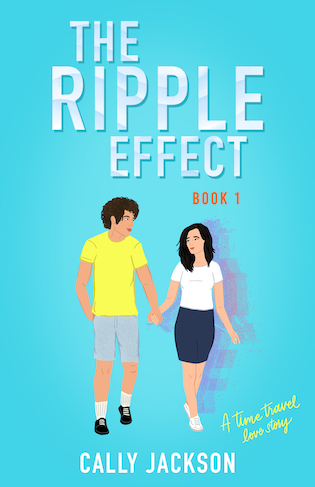
The Ripple Effect
Cally Jackson
Publication date: September 14th 2023
Genres: Adult, Romance, Time-Travel
The Time Traveller’s Wife meets The Butterfly Effect in this touching, heart-felt love story.
When Caitlyn Richter turns twenty-one, she begins having strange, unsettling episodes: pins and needles in her hands, a rushing noise in her ears, and a blinding light obscuring her vision. After a bad episode, Caitlyn finds herself somewhere different, with no idea how she got there. To her horror, Caitlyn learns she has inherited a disorder that causes her to travel back and forth in time uncontrollably, and to make matters worse, one small change to the past can have massive consequences for the present.
Caitlyn quickly realises she must do whatever it takes to leave the past unchanged. But that’s easier said than done, especially after she meets Toby Beech, an attractive 1980’s carpenter who wants to spend as much time with her as possible, and who she finds herself falling in love with.
Caitlyn has two choices. She can force herself to stay away from Toby and keep her life in the present intact. Or she can follow her heart and risk the ripple effect wreaking havoc on everything and everyone she loves.
An impossible decision. An ill-fated love.
An incredible story you don’t want to miss.

Author Bio:
Cally Jackson grew up in the small country town of Gatton, Australia. Her passion for fictional writing first emerged in grade two when she got in trouble for penning her own tale instead of copying directly from a story book as she was supposed to be doing – it was a handwriting exercise, after all.
Cally now lives in Brisbane with the two loves of her life – her husband, Mark, and their dog, Lucy. The Big Smoke is her first novel.
GIVEAWAY!
—
The Book of Alys by Alan Gold blitz with giveaway
**This post contains Amazon affiliate links which will allow me as an associate to earn a small commission on any purchase made through the link of the products I share. This commission in no way changes the pricing of any items for the buyer.**

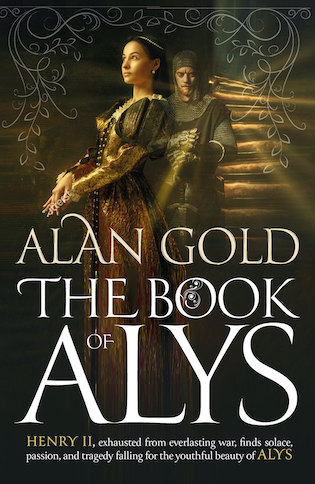
The Book of Alys
Alan Gold
Publication date: May 31st 2023
Genres: Adult, Historical Romance
King Henry II, exhausted from everlasting conflict with France and the bad habit of his sons rebelling against their father finds love, solace, and passion after falling for the youthful beauty of Alys and makes her his mistress.
Alys ’father, King Louis VII of France was a man in desperate need of an heir. Alys was his fourth daughter from two wives. After divorcing Eleanor, he married Alys ’mother Constance.
The desperate need for a son meant that King Louis was striding down the aisle just five weeks after Constance’s death (not to say that he wasn’t grieving, it was said he was deeply affected by his loss), this time with Adele of Champagne who was twenty years his junior. Alys was finally joined by the longed-for brother when she was five years old, and then another sister named Agnes.
Long before Alys came on to the scene her father had been at war, on and off, with Henry II of England. While Louis needed a son to inherit his throne, his daughters were also important as diplomatic tools. Alys first played her part in January 1169, when Louis and Henry met to sign the Treaty of Montmirail near Le Mans.
The treaty set out Henrys plans for his lands. His eldest son also Henry would inherit the English throne (he had been married to Alys ’sister Margaret in 1160). His second son, Geoffrey, was already betrothed to the heiress to the Duchy of Brittany, Constance.
As the third son Richard would inherit Aquitaine. The treaty formed the official betrothal of Alys to Prince Richard and agreed that she would be raised as a ward of King Henry, in the household of Queen Eleanor.
At this point Alys was never considered to be a future English queen. Richard was third in line to the throne, his older brothers were both healthy and had survived the worst dangers of infancy, and their marriages would take place before his.
Although she was only eight years old at the time, Alys was handed over to the English court to be raised alongside her anticipated future sister-in-law Constance of Brittany, and her own sister Margaret.
How much time she spent with her betrothed isn’t really known. Especially since Richard and his brothers then got into the bad habit of rebelling against their father.
As Alys grew up and the wedding with Richard didn’t take place, rumours began to circulate that she had become mistress to King Henry, and thus could not marry his son. Henry’s wife Eleanor of Aquitaine had been imprisoned in 1174 after supporting her rebellious sons. Henry reportedly was considering getting an annulment for his marriage to Eleanor so he could marry his mistress ‘Fair Rosamund’. However, one chronicler claimed that Henry was actually considering marrying Alys himself.
She was young, she was the daughter of a King of France, and her sons might have a potential claim to the French throne. It was even rumoured that Henry would disinherit his sons
by Eleanor and replace them in the line of succession with any sons he might have by Alys. It was even stated that Alys already had at least one child, possibly two, by Henry in the time she was his mistress.
Goodreads / Amazon / Barnes & Noble
—
EXCERPT:
Queen Eleanor of England and Aquitaine gripped the arms of her seat in fear for her safety, waiting for the coming onslaught. Although she was seated on the periphery of the dais, she knew from painful experience that when her husband’s temper was roused, anybody within range of his fists or feet or sword could suffer imminent death.
Accustomed to his explosive temper, and known to give as good as she received, even the Queen was shocked by his sudden violent outburst against the cardinal. The fat pompous cleric, looking more like a throbbing red pustule about to erupt than a Prince of the Church, was acting as though he, rather than King Henry, had been anointed by God as ruler of the nation.
Author Bio:
Alan Gold began his career as a journalist, working in the UK, Europe, and Israel. In 1970, he emigrated to Australia with his wife, Eva, and now lives in St. Ives, Sydney, where he divides his time between writing novels and running his award-winning marketing consultancy.
GIVEAWAY!
—
 Carries Book Reviews



Recent Comments